
Three traits of a process that's a good fit for your first AI pilot
Not every business process makes a good first AI pilot. Three traits — a clear, repeatable input, a measurable outcome, and a contained blast radius for mistakes — help you pick the right one to start with.
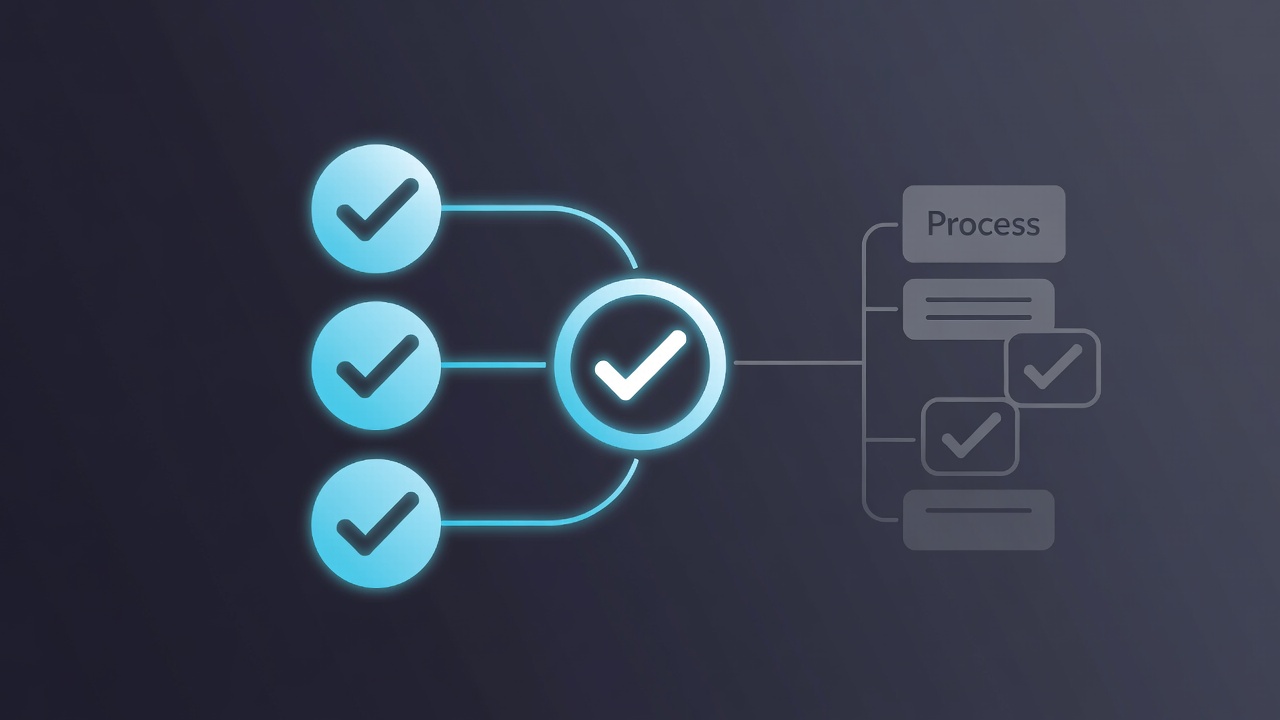
Companies that pick the wrong process for their first AI pilot usually run into the same problem — they choose something either too important to risk a mistake on, or too vague to tell whether the pilot actually worked. Before you commit to a first rollout, it's worth running the process through three criteria, rather than picking whichever team talks about AI the most.
1. A clear, repeatable input
The process needs an input that looks roughly the same every time — an invoice, an inquiry, a specific type of email, a form. The more varied the inputs, the harder it is to judge the pilot's results, because you never know whether a mistake came from the AI or from an unusual input that only shows up once a month anyway.
2. A measurable outcome
The pilot needs a clear definition of success before it starts — how long the process currently takes, its error rate, how many people are involved. Without that baseline, the conversation a month into the pilot turns into impressions — "it feels faster" — instead of numbers. Processes where success is hard to measure aren't a good fit for a first pilot, however interesting they might otherwise be.
3. A contained blast radius for mistakes
The last and most important criterion: what happens when the AI gets something wrong. For a first pilot, you want a process where a mistake means one extra check for a person, not a damaged client relationship or a financial loss. Summarising an internal meeting, sorting incoming mail, or preparing materials for a salesperson are examples where a mistake costs a few minutes to fix. Approving payments or unchecked customer communication don't belong in a first pilot.
A process that meets all three
When all three criteria line up, it makes sense to launch the pilot within weeks, not months of preparation. These tend to be smaller, unglamorous-looking processes — not a big transformation project meant to solve everything at once. That's actually the advantage: a smaller process can be rolled out quickly, evaluated on real data, and either expanded or stopped, without a failed attempt costing the company months of work.
What comes next
In the AI Opportunity Sprint, this is exactly the filter we run company processes through as a first step — not looking for where AI could theoretically help, but where a pilot has a real chance of succeeding and showing a result worth building on.