
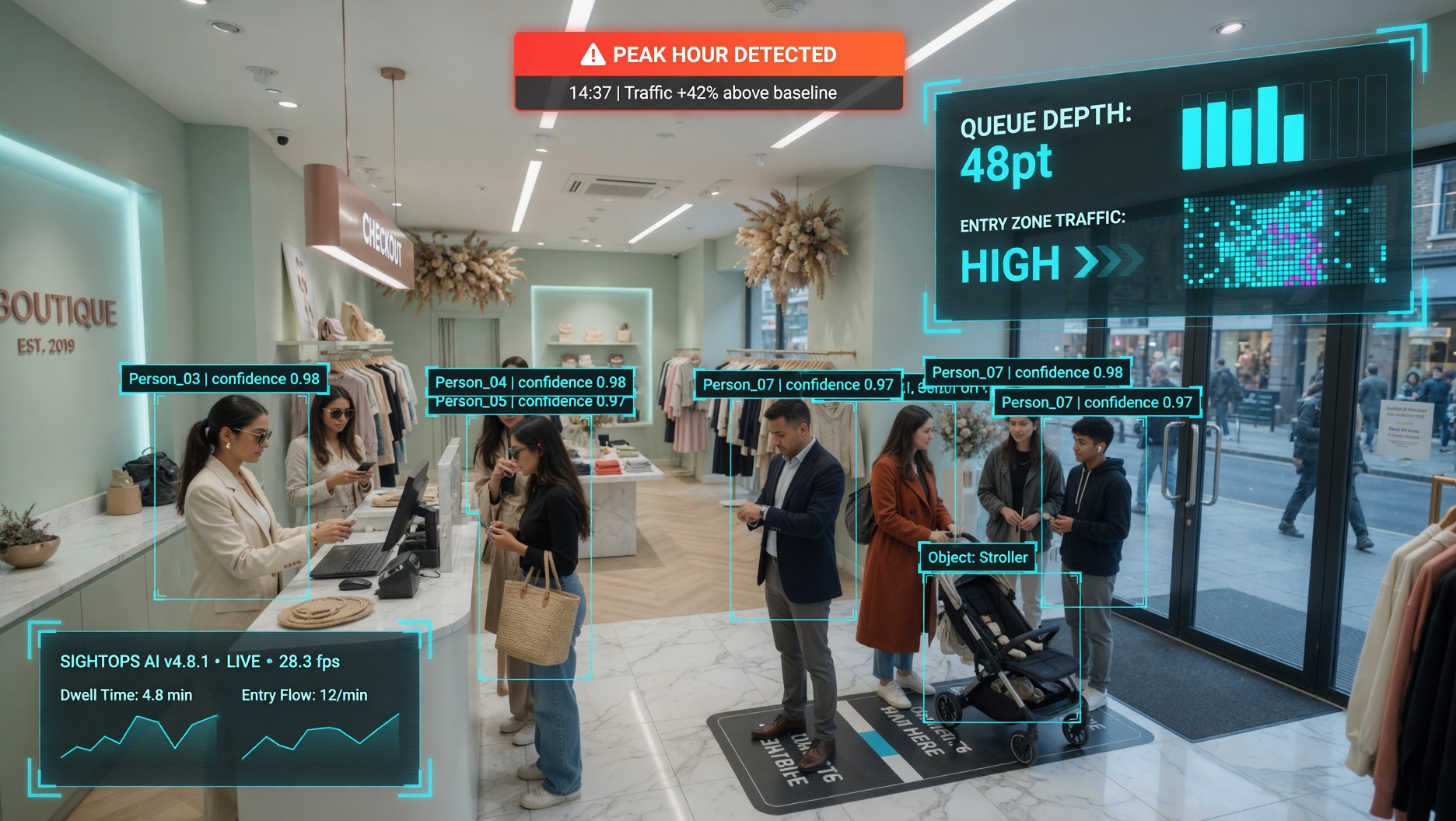
Operations and queues in retail
Time spent in-store, entries, peak periods, and overloaded zones.
Computer vision technology
Computer vision for operations that already have cameras, but don't yet use the information from them for decisions.
Promise to the customer
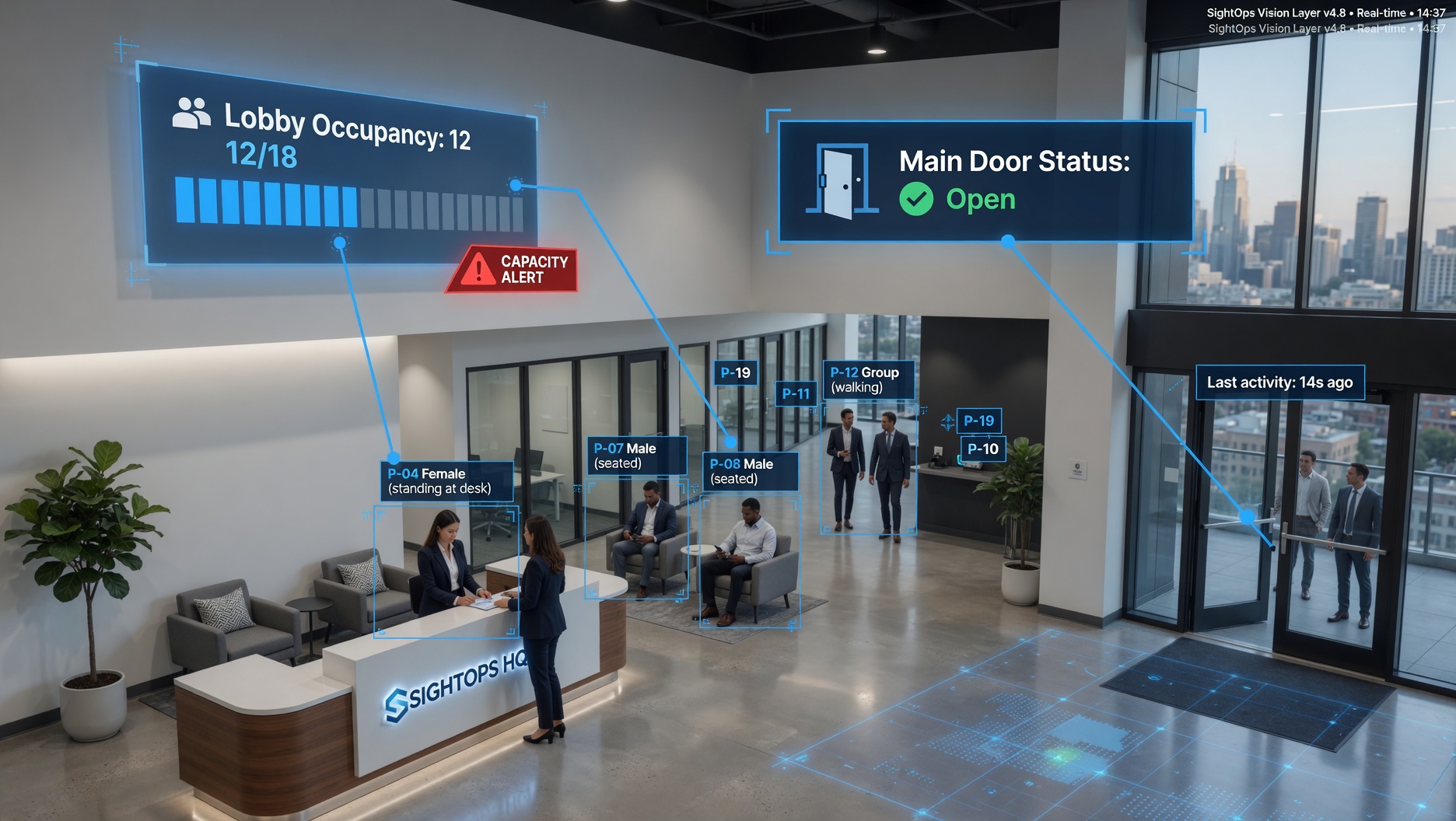
Cameras turn from passive recording into a live operational signal: queues, occupancy, safety, movement, and alerts.
Ready for a pilot
It starts with a small scenario that can be explained, measured, and decided on based on the result.
SightOps turns video into events, metrics, and alerts a manager can act on directly.
Camera
RTSP / IP camera / operational feed
We connect to existing cameras or a test feed without disrupting operations.
Examples and presentation
Time spent in-store, entries, peak periods, and overloaded zones.
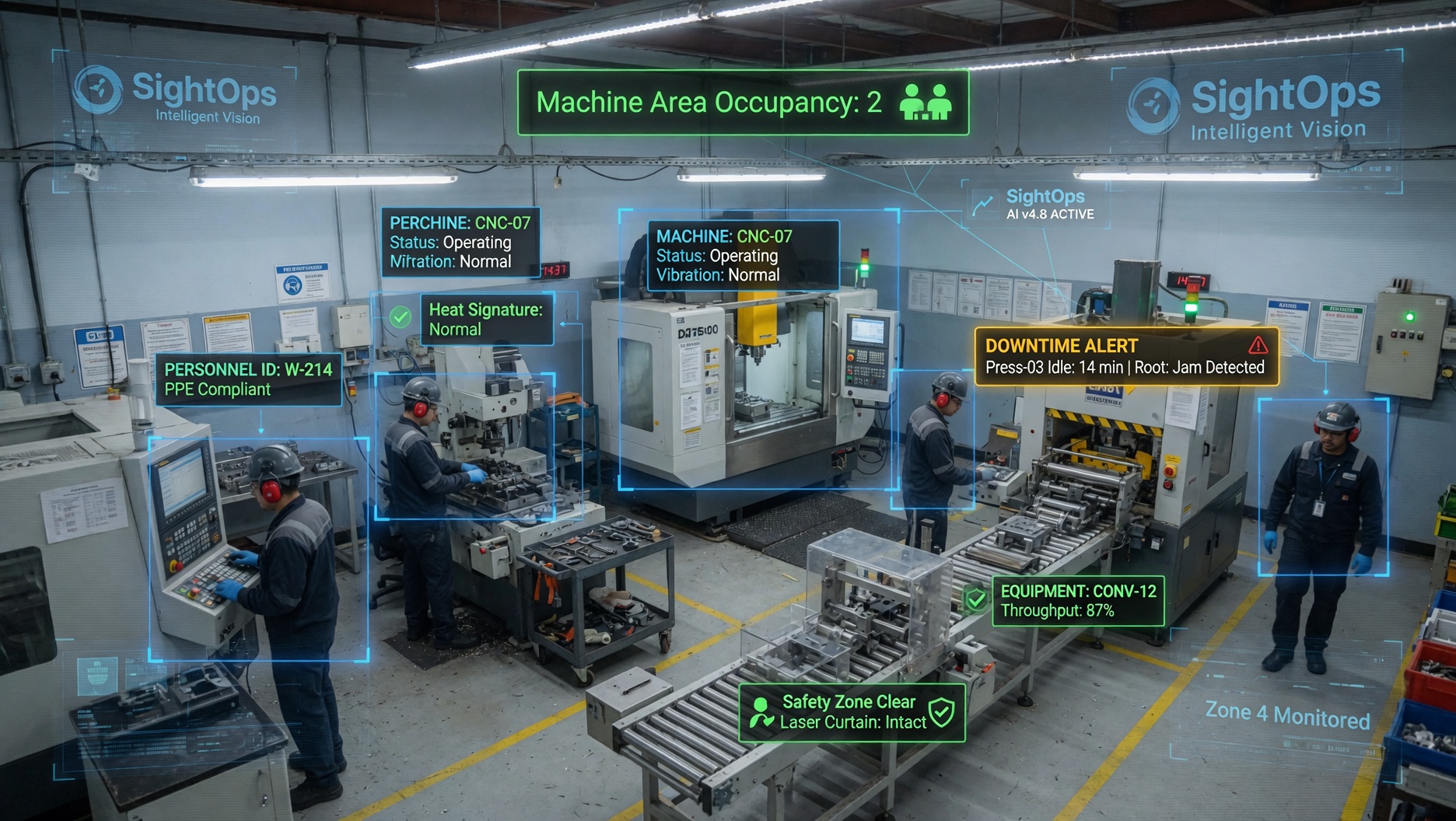
Monitoring zones, machines, people's movement, and safety rules.
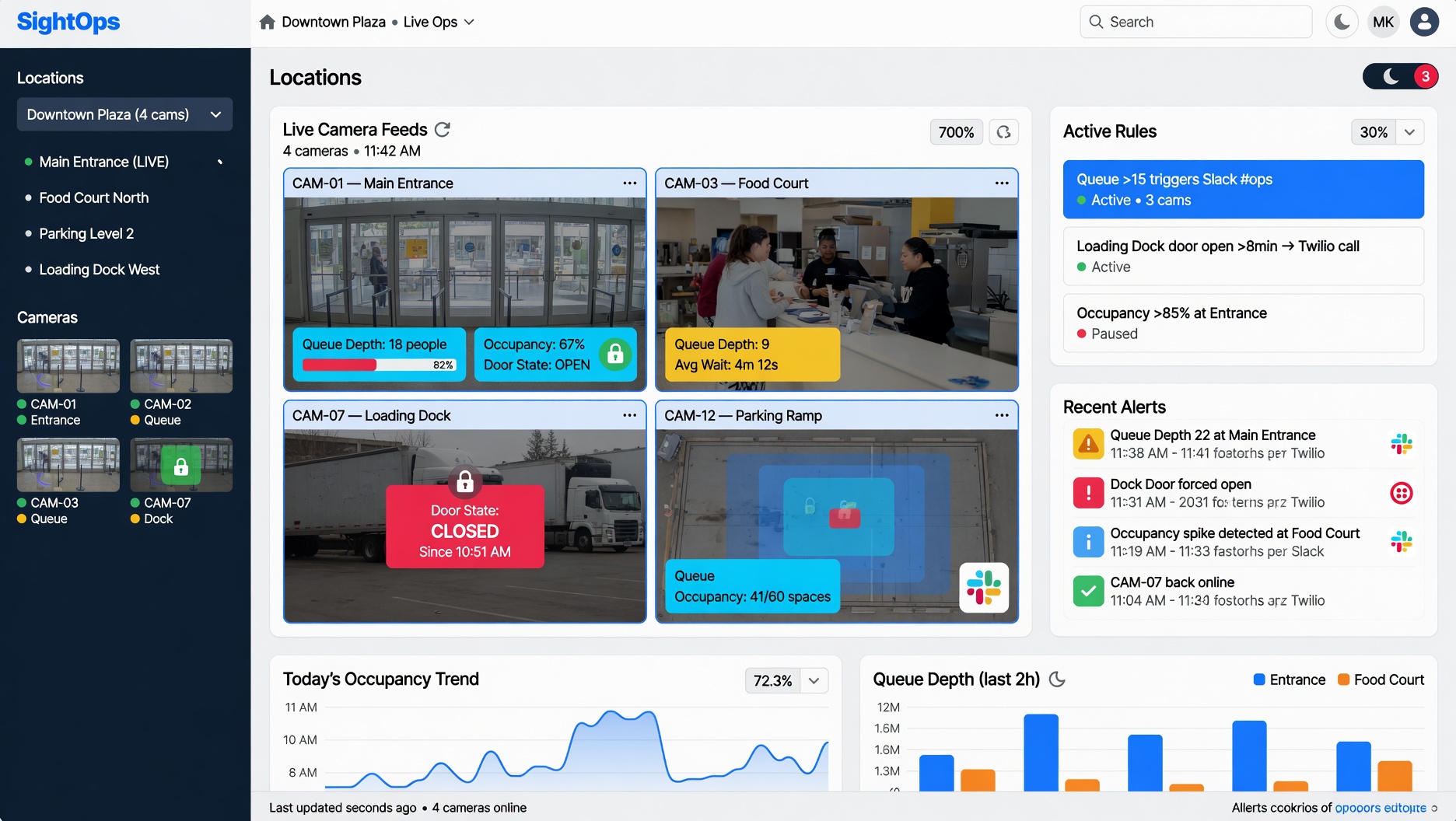
One place for overview, rules, and alerts across all locations.
Model case
A location has peak periods, but the manager lacks precise data on when queues form and how quickly staff respond.
Connecting 2-4 cameras
Defining zones and queues
Measuring wait time and alerts
Dashboard for daily review
Expected business impact
The goal is to reduce wait time, plan shifts precisely, and catch overload before it shows up in revenue or reviews.
The customer doesn't need to understand the architecture. It's enough to describe the scope, number of locations, and data readiness. The recommendation shows whether an audit, a pilot, or a broader system fits best.
Implementation
SightOps Pilot
2-4 weeks
One location, a few cameras, a measurable scenario, and ROI evaluation.
Multi-site rollout
6-12 weeks
Central dashboard, rules for multiple locations, and reporting.
Custom vision system
custom
Custom models, on-premise/hybrid operation, SLA, and integrations.
Start with a short AI Opportunity Sprint. Together we'll identify the processes that make the most sense to automate first.